Everybody loves a Dachshund for the same reason: that long little body doing its confident, waddling strut down the sidewalk is basically a comedy act. And they know it. But here's what almost nobody tells you when you bring one home — that same long body is also the single biggest health risk this breed faces, and most owners don't find out until something's already gone wrong.
I don't own a Dachshund myself. Bonnie and Bellina, my two Maltese, are built completely differently — compact, square, no spine to worry about. But I've spent weeks talking to Dachshund owners and vets for this guide, and the same warning kept coming up unprompted, every single time: protect the back before anything else matters.
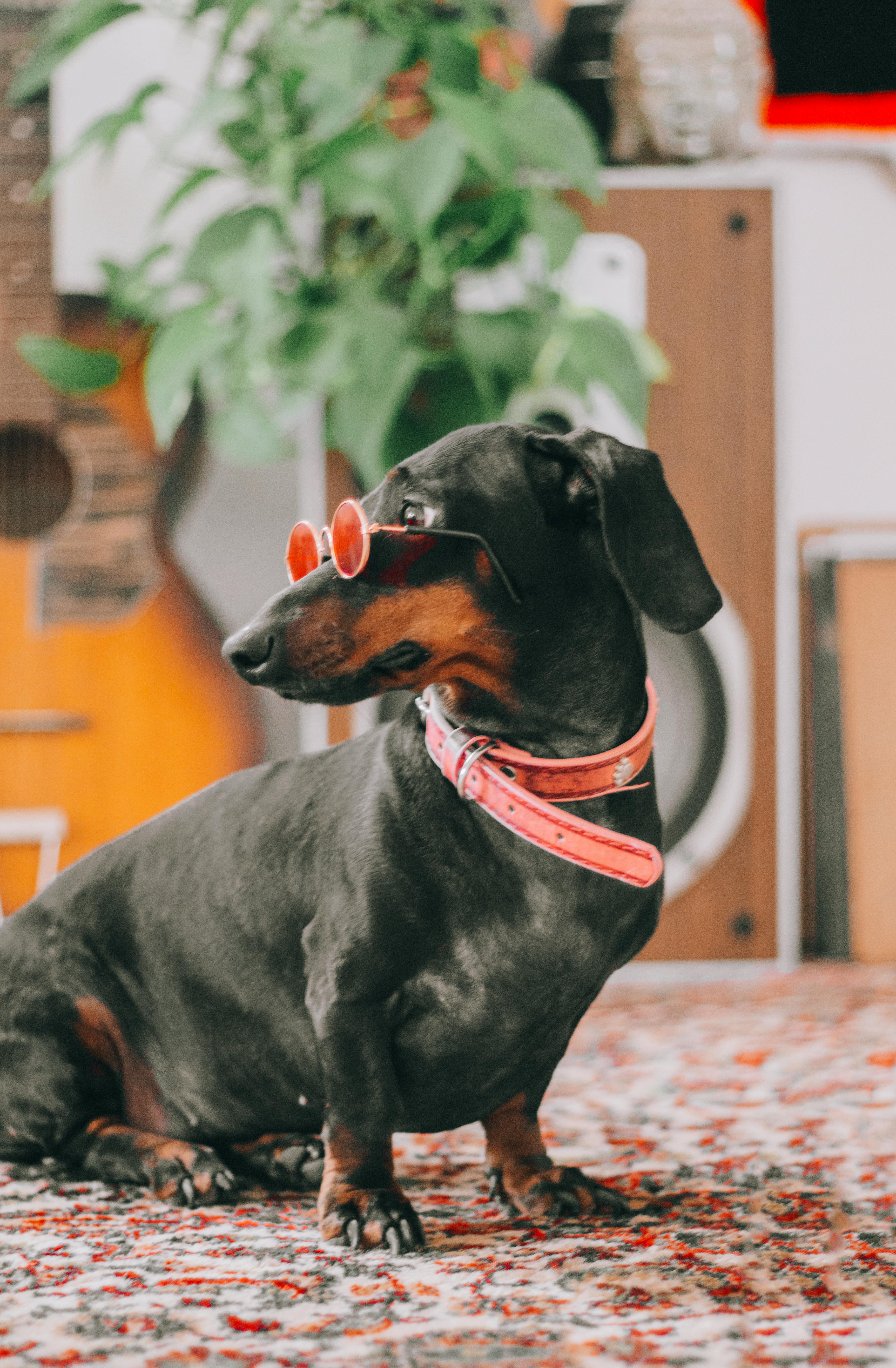
So that's how this post is structured. We'll cover the temperament, the surprising hunting-dog history behind the stubbornness, and the three coat types most people don't realize exist — but the center of this guide is the spine. Get that part right and a Dachshund is one of the most rewarding, funniest, most loyal dogs you can own. Get it wrong and you're looking at surgery bills and a dog in pain. Let's get into it.
Bred to Hunt, Not to Lounge
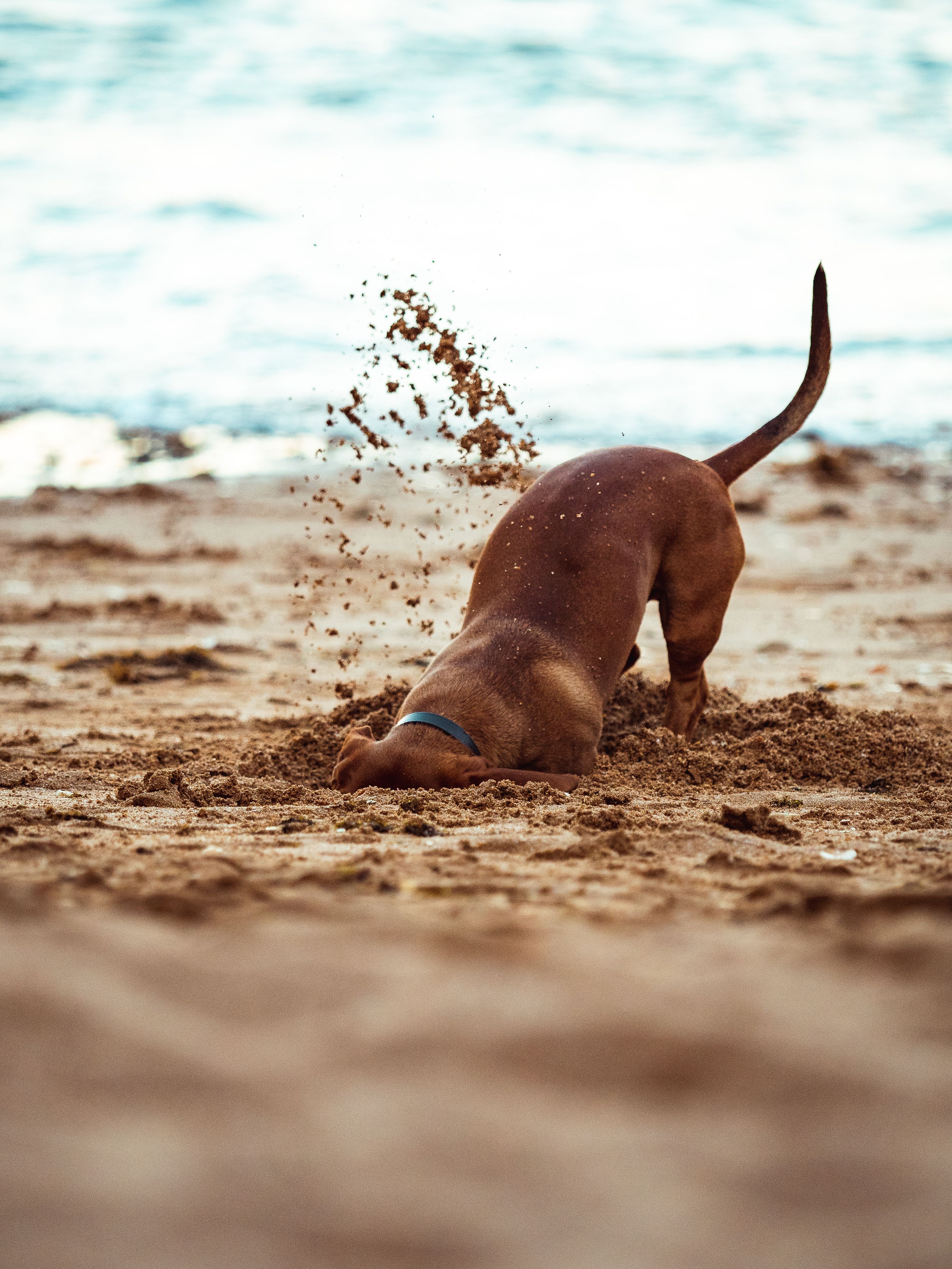
The name literally translates from German as "badger dog," and that's not a cute historical footnote — it explains almost everything about how this breed behaves today. Dachshunds were purpose-built a few centuries ago to chase badgers into their tunnels, dig them out, and fight them underground if it came to that.
Think about what that job requires: a body narrow enough to fit down a burrow, powerful enough front paws to dig through packed earth, the nerve to corner an animal that outweighs you, and zero interest in giving up once you've started. Every one of those traits is still sitting right there in your living room, wrapped in a dog that looks like a plush toy.
That's why Dachshunds dig at couch cushions, why they'll bark at something for ten straight minutes with total conviction, and why "sit and stay calmly" doesn't come naturally the way it does for a retriever bred to work alongside a handler. You're not dealing with a disobedient dog. You're dealing with a badger hunter who's very good at their original job and has no idea that job doesn't exist anymore.
Why this matters for training: once you stop expecting golden-retriever levels of eager compliance and start working with the hunting instinct instead of against it, training gets dramatically easier. More on that below.
Living With One — Temperament in the Real World
Dachshunds are, without much competition, one of the most confident small dogs that exist. They genuinely don't seem to know they're small. This is charming until it isn't — a Dachshund will bark at a Great Dane with the same energy it barks at the mail carrier, and it will absolutely try to start something if it feels cornered.
They're also deeply affectionate, often bonding hardest to one specific person in the household, and they love burrowing — under blankets, into pillow forts, inside your coat if you let them. That badger-tunnel instinct doesn't disappear just because the badgers are gone.
With children, supervision matters more than with a lot of breeds — not because Dachshunds are aggressive by nature, but because their spine makes rough handling genuinely risky, and their willingness to snap when hurt or startled is higher than a more easygoing breed. Teach kids the "no picking up, no squeezing the middle" rule from day one.
They do fine in apartments, honestly better than most people expect, since their exercise needs are moderate rather than extreme. Two decent walks a day and some sniffing time covers it. What they don't do well with is being left alone for long stretches — this is a breed that was bred to work in partnership with a human, and isolation brings out separation anxiety fast.
That one-person bond is worth planning around if your household has a clear "favorite." It's not favoritism on the dog's part in any mean sense — it's how the breed forms attachment, often to whoever handles feeding and walks most consistently. Rotating those duties early, before the bond fully sets, gives everyone in the house a fair shot at being "their person," and makes life easier if that primary person travels or is unavailable for a stretch.
The Spine: What Nobody Tells You Before You Buy
Here's the part of this guide that actually matters most. Dachshunds are what's called chondrodystrophic — a genetic build where the spine's discs degenerate faster and harder than in a normally proportioned dog. Combine an elongated spine with short, disproportionate legs, and you get a structure that's simply more vulnerable to disc rupture than almost any other breed on the planet.
The condition is called IVDD — intervertebral disc disease — and estimates put it at affecting roughly a quarter of all Dachshunds over their lifetime. When a disc ruptures or bulges, it can press on the spinal cord, and depending on severity that ranges from pain and reluctance to move all the way to sudden hind-leg paralysis. This isn't a rare fluke. It's the single most common serious health event in this breed, and it's largely preventable with the right daily habits.
The behaviors that spike risk are almost all things owners do without thinking twice: letting the dog jump on and off the couch or bed repeatedly, letting them run up and down stairs unsupervised, picking them up incorrectly (supporting only under the front legs, letting the back half dangle), and allowing excess weight to pile onto a spine that's already working overtime. None of these look dangerous in the moment. That's exactly the problem.
Age matters here too. IVDD risk tends to climb in dogs between three and seven years old — not puppies, not seniors, but right in the middle of what feels like a dog's most active, healthy years. That timing catches owners off guard, because there's rarely an obvious injury moment. A disc can degenerate gradually from years of small, repeated strain, then finally give out on an ordinary Tuesday during an ordinary jump off the bed. Prevention has to start early, well before any symptoms show up, because by the time symptoms appear the damage is often already done.
The single highest-leverage fix is embarrassingly simple: block access to jump-off points, or put a ramp there instead. I went looking for what Dachshund owners actually buy for this, and the one that kept coming up across owner reviews is the adjustable dog ramp built for couches and low beds (see disclosure above) — a low, gentle incline that removes the jump entirely rather than trying to train the instinct away, which almost never works on a determined Dachshund.
Critical rule: if your Dachshund suddenly won't move, cries when picked up, drags a back leg, or loses bladder control, that's an emergency vet visit — not a wait-and-see situation. Early treatment for IVDD dramatically improves outcomes; delayed treatment often doesn't.
Life With a Dachshund
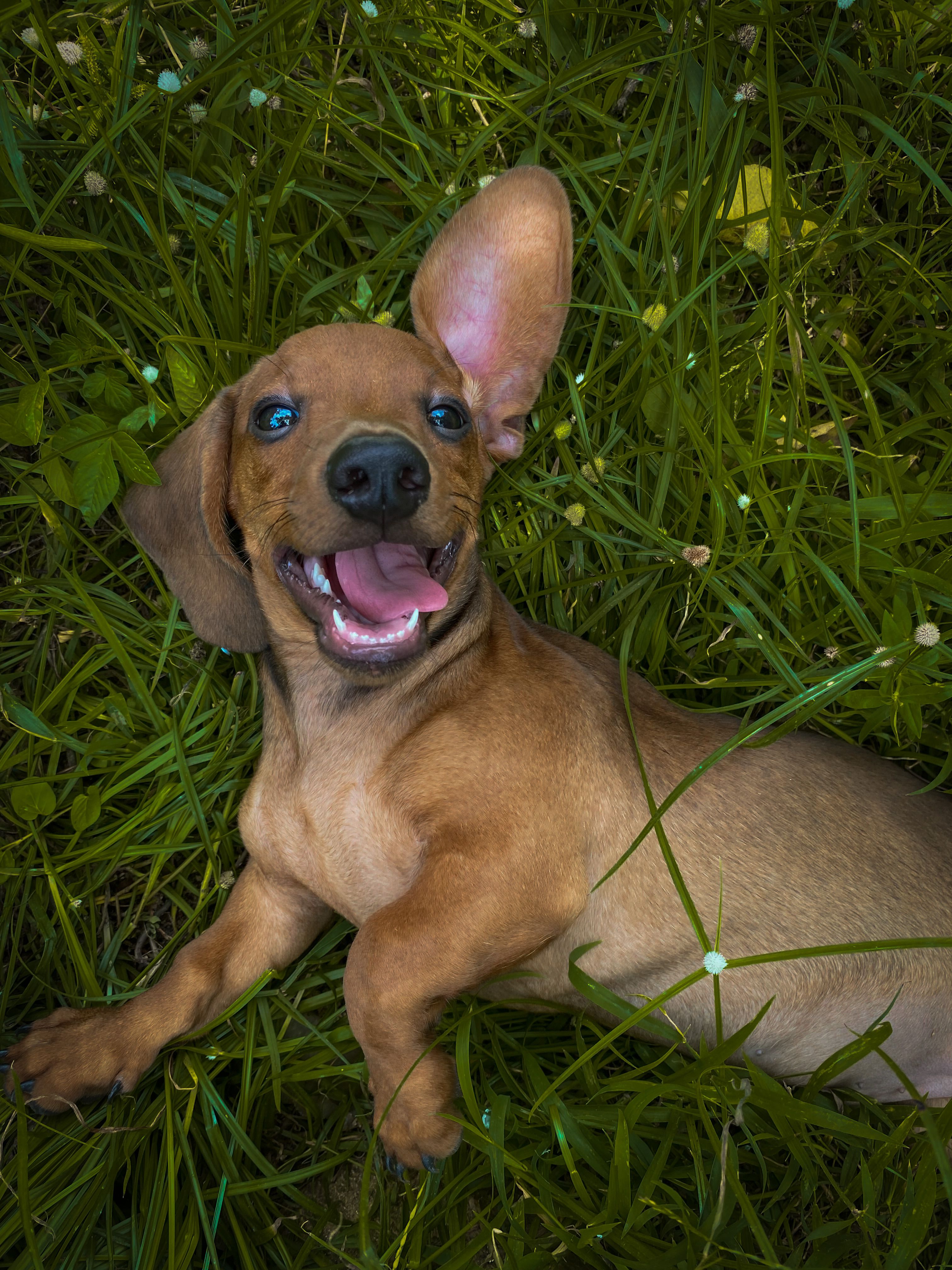


Daily Care — Where the Time Actually Goes
Dachshunds don't need marathon exercise sessions, but consistency matters more than duration for a breed prone to weight-driven spine strain. Here's roughly how a well-balanced day breaks down:
A Balanced Dachshund Day
Around an hour total split across the day beats one long walk — less cumulative joint and spine impact, more mental stimulation.
Three Coats, Three Routines
Most people picture one Dachshund look, but the breed actually comes in three genuinely different coat types, and grooming needs shift a lot between them.
Smooth-Coat
Short, shiny, low-maintenance. A weekly wipe-down with a rubber grooming mitt handles shedding. No haircuts needed, ever. This is the lowest-effort coat of the three by a wide margin.
Wire-Haired
Dense, wiry, slightly scruffy on purpose. Needs hand-stripping or clipping every few months to keep the texture correct, plus a weekly brush-out. More upkeep, but sheds very little.
Then there's the long-haired variety — soft, silky, and the one most likely to be mistaken for a small spaniel at a glance. This coat needs brushing two to three times a week minimum to prevent matting, especially behind the ears and along the belly, plus a trim every couple of months to keep feathering tidy. If you're choosing a puppy and grooming time is a real constraint for your schedule, that's a legitimate factor to weigh — the three coats are not equal in time commitment, whatever the breeder tells you.
Watch our full Dachshund breed guide on the Balanced Ben Pets YouTube channel.
Training a Dog That Thinks It Already Knows Best
Remember the badger hunter living in your living room? This is where it shows up most. Dachshunds are smart — genuinely smart — but that intelligence comes paired with independence, because their original job required making split-second decisions underground without waiting for instructions from a human who couldn't even see them.
That means reward-based training works far better than correction-based training, and short, high-value sessions beat long drilling ones. Five focused minutes with real food rewards will get further than twenty minutes of repetition and frustration. Consistency across every household member matters enormously — a Dachshund that gets away with jumping on the couch when one person's watching will absolutely keep testing that boundary with everyone else.
House-training also tends to take longer than owners expect, sometimes stretching past the timeline that works for easier breeds. That's not defiance either — it's a combination of small bladder size and that same independent streak. Crate training and a strict schedule, not punishment, get you there fastest.
The Mistakes That Hurt This Breed Most
Letting weight creep up. Every extra pound is disproportionately harder on a Dachshund's spine than on a normally built dog. Keep an eye on the waist tuck — you should be able to feel ribs without heavy pressure, and there should be a visible waist from above.
Free-feeding and treat overload. Combine a small body with a food-motivated temperament and it's easy to overfeed without noticing. Measure meals; don't guess.
Rough handling by kids or guests. Anyone who hasn't been shown the "support the whole body, never let the back half hang" rule for picking up a Dachshund is a real risk, even with good intentions.
Skipping the harness for a collar. Collar pressure concentrates force on the neck and upper spine during any pulling or lunging — a bigger deal for this breed than most. I'd point owners toward something like a properly fitted Dachshund-cut raincoat (see disclosure above) for cold, wet walks too — short coats and a low-slung belly mean this breed gets cold and soaked faster than you'd expect, and a chilled dog tenses its whole back walking hunched against the cold.
Letting stairs become a daily habit. The occasional supervised stair trip isn't the crisis — it's the twenty-times-a-day unsupervised sprinting up and down that adds up over years.
Standard vs. Miniature — Does Size Change Anything?
Both sizes share the exact same body proportions and the exact same IVDD risk profile — the mini isn't a "safer" version, just a smaller one. Where they differ is mostly practical: Miniatures fit apartment life and lap-dog companionship a little more easily, while Standards retain slightly more of the original hunting drive and stamina, since they're closer to the size that was actually bred for badger work.
Health-wise, some owners report Miniatures skew slightly more prone to dental crowding given the smaller jaw, while Standards can carry a bit more weight before it becomes a spine problem — but neither difference is dramatic enough to be a deciding factor on its own. Pick based on your living situation and energy match, not a size-based safety assumption.
Frequently Missed Questions
Do Dachshunds get along with other pets? Usually yes, especially if raised together, though the prey drive from their hunting background means small caged pets — rabbits, guinea pigs, hamsters — can trigger a chase instinct that's genuinely hardwired, not trainable away entirely.
Are they good with first-time dog owners? With eyes open about the training stubbornness and the spine-care rules, yes. Going in expecting a compliant, low-maintenance dog is where the mismatch happens.
How much barking is normal? More than most breeds, honestly. They were bred to alert hunters to what was happening underground, and that vocal instinct is very much intact. Early training on a "quiet" cue helps, but expect a genuinely vocal dog from day one.
Do all Dachshunds need surgery eventually? No — most live their whole lives without a single disc episode when weight, ramps, and handling are managed well from puppyhood. IVDD is a real and elevated risk for this breed, not an inevitability. The owners who get blindsided are almost always the ones who didn't know the risk existed at all, which is really the whole point of this section.
The Dog Underneath the Comedy
Strip away the internet memes and the wiener-dog jokes, and what's left is a genuinely brave, deeply devoted dog with more personality per pound than almost any breed I've come across researching this site. The spine risk isn't a reason to avoid the breed — it's a reason to change a handful of daily habits that cost you nothing and could spare your dog years of pain.
Ramp instead of jump. Harness instead of collar. Measured meals instead of free-feeding. Those three habits, done consistently from puppyhood, handle most of the risk this breed carries. Everything else — the digging, the barking, the stubborn streak — is just badger-hunter personality with nowhere left to hunt, and honestly, that's part of the charm.
More Reading
These guides pair well with this topic: