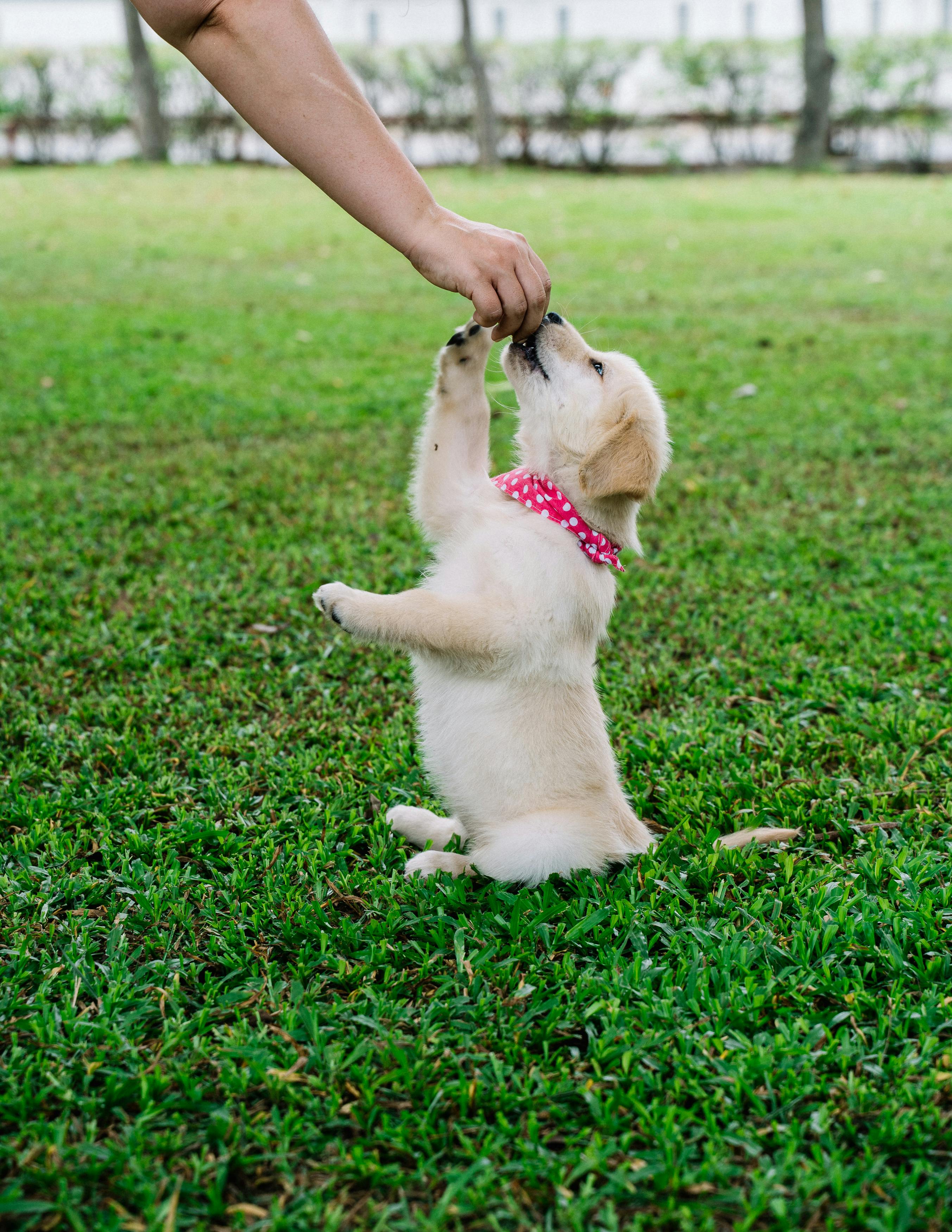
Puppy Training Timeline: What to Teach (and When) for a Well-Behaved Dog
This article may contain affiliate links. If you make a purchase through these links, we may earn a small commission at no extra cost to you.
Most puppy guides tell you what to teach but skip the when. Timing is everything in puppy development. A puppy at 8 weeks is neurologically and emotionally different from a 5-month-old, who is completely different again from a 10-month-old teenager. Expecting the wrong thing at the wrong age creates frustration for both of you — and can accidentally undo progress that was going well.
This guide walks through each major developmental stage from first week home through the young adult phase. You will find what to teach at each age, how to set up feeding and potty routines that actively support training, and how breed size changes every one of these timelines — because a Chihuahua and a Great Dane puppy do not follow the same developmental clock.
"The best puppy training does not fight development — it works with it."
How to use this guide: jump to your puppy's current age for immediate, practical guidance, or read through the full timeline to understand what is coming next and plan ahead.
Puppy Development: Infant → Feeding → Adolescent → Young Adult 🐾

Understanding Dog Age vs. Human Age
Dogs do not age at a steady rate relative to humans. The early months pack in enormous development — neurologically, hormonally, and emotionally — in a fraction of the time a human child takes. A puppy at 8 weeks is more like a human infant in sensory terms, but by 6 months they are closer to a pre-teen navigating hormonal shifts and boundary-testing. Understanding this comparison helps set realistic expectations at every stage.
Size matters significantly here. Toy and small breeds reach physical and emotional maturity much earlier than large and giant breeds, which can remain in a prolonged adolescent phase well into their second or even third year.
| Dog Age | Human Equivalent | Toy/Small Breeds | Medium Breeds | Large/Giant Breeds |
|---|---|---|---|---|
| 8–12 weeks | Infant (0–2 yrs) | High sensory absorption, forming first bonds | Same — critical imprint window open | Same — will stay "puppy-brained" longer |
| 3–6 months | Toddler/Young child (2–6 yrs) | Rapid learning, short attention span | Energetic, beginning to test limits | Still very immature; keep expectations low |
| 6–12 months | Pre-teen/Teenager (10–14 yrs) | Many small breeds near full maturity | Adolescence in full swing | Deep in adolescence; big body, puppy brain |
| 1–2 years | Young adult (16–25 yrs) | Emotionally settled; training solidifies | Stabilizing — most training locks in | Reaching maturity only toward end of this window |
| 2+ years | Adult (25+ yrs) | Full adult — consistent behavior expected | Full adult | Finally true adult — large breeds here at 2–3 yrs |
8–12 Weeks: The Infant / Foundation Phase
This is the most sensitive learning window in your puppy's life. The brain is absorbing everything — sounds, surfaces, faces, routines, and smells — and filing these experiences as "normal." What happens (and what does not happen) during these weeks shapes your puppy's confidence and adaptability for years.
Expectations should be extremely gentle. This is not the time for complex commands. It is the time to build safety, trust, and the very first routines that everything else will be built on.
What to Focus On
- Name recognition: say your puppy's name cheerfully and reward any eye contact — within a week most puppies respond reliably
- Crate introduction: feed meals in or near the crate, let the puppy explore freely, never use it as punishment
- Potty training basics: take outside immediately after every meal, nap, play session, and every 1–2 hours while awake
- Gentle handling: touch ears, paws, mouth, and tail during calm moments — paired with treats — to build body handling tolerance
- Very basic socialization: calm household sounds, different surfaces underfoot, meeting a small number of calm people
Potty Training at This Age
At 8–12 weeks, puppies cannot reliably hold their bladder for more than 1–2 hours while awake. Their signals are subtle and easily missed. Your best tool is a strict schedule, not waiting for the puppy to ask. Take outside first thing every morning, after every meal, after every nap, after every play session, and last thing before bed. Reward the moment they finish eliminating outdoors with calm, genuine praise.
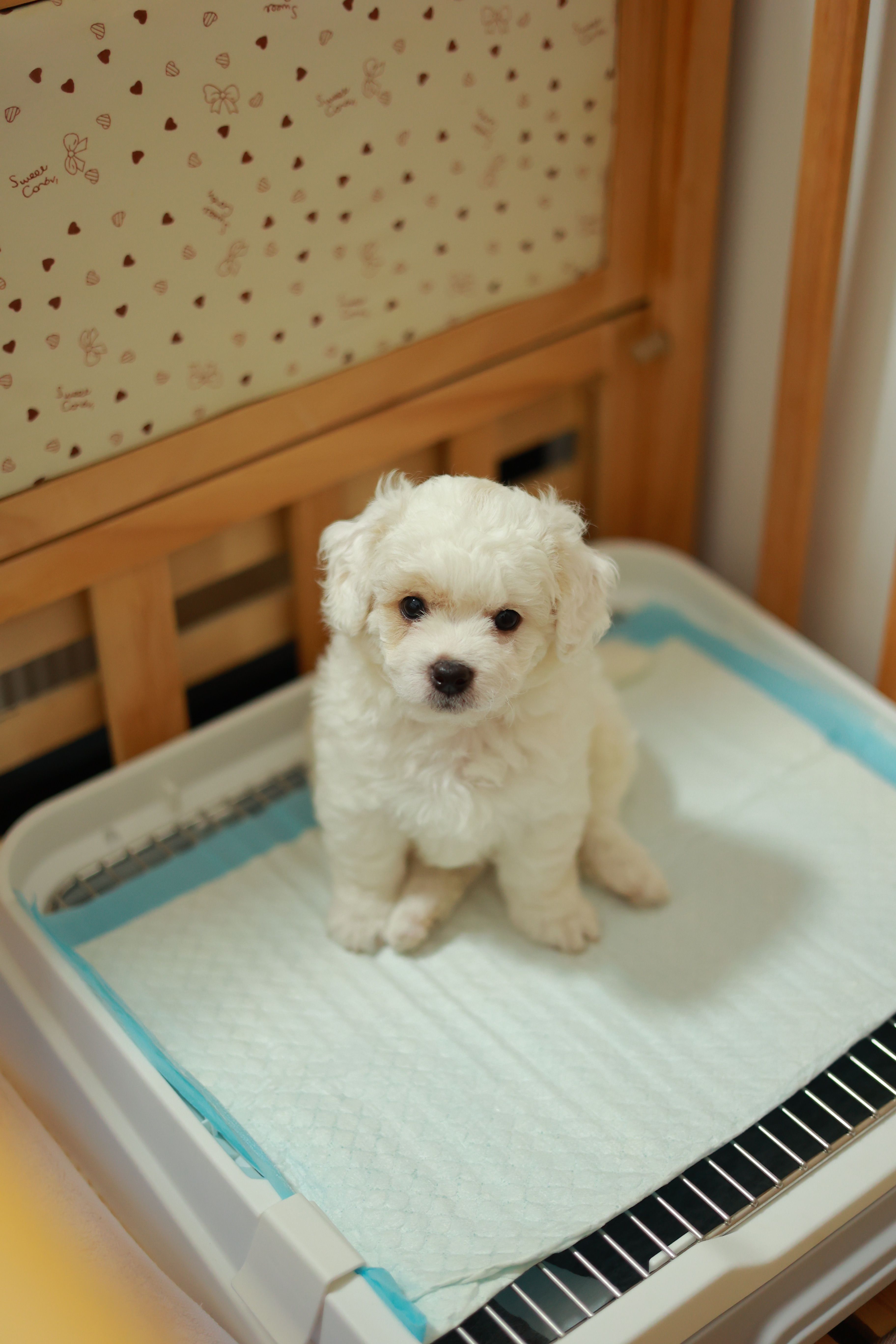
Choose one designated potty area and bring the puppy there every time. The familiar scent helps trigger the behavior. That spot should be away from where the puppy eats, drinks, and sleeps — puppies instinctively avoid soiling near their living and eating spaces.
Feeding at This Age
At 8–12 weeks, puppies need 3–4 small meals per day on a consistent schedule. Fresh water should be available throughout the day (but can be picked up about 2 hours before bedtime to help overnight potty training). Use a high-quality puppy formula appropriate for your breed's expected adult size — toy, small, medium, or large breed formulas are not interchangeable. Place food and water bowls in a quiet, consistent spot well away from the sleeping area and well away from the designated potty area.
Distance rules: keep the feeding area, sleeping area, and potty area as three distinct, clearly separated zones. Puppies are naturally less likely to eliminate near where they eat and sleep — use that instinct to your advantage.
3–4 Months: The Toddler / Early Learning Phase
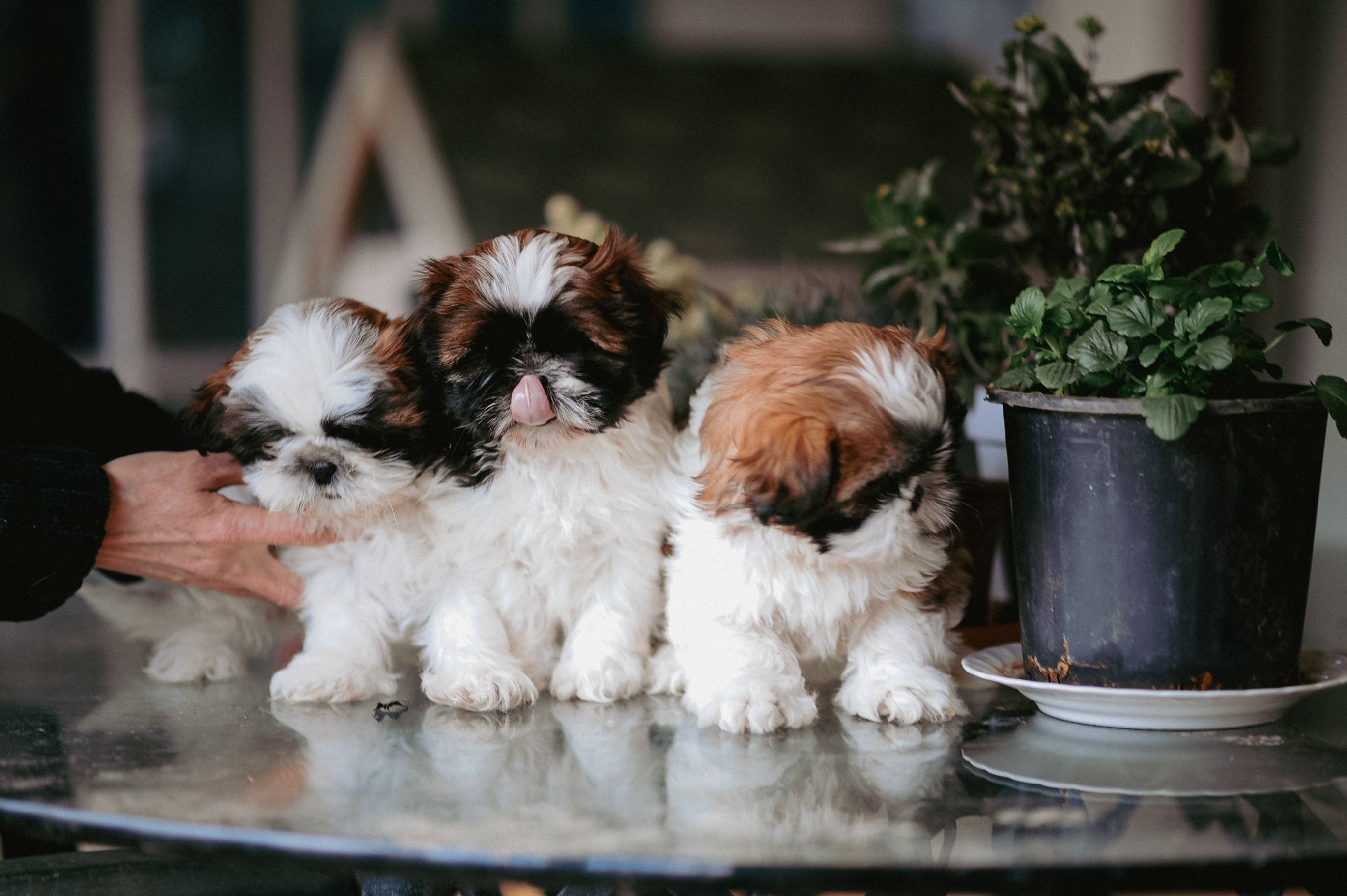
Between 3 and 4 months, your puppy's attention span is growing, their brain is hungry for input, and they are ready to start learning simple commands. This is also the tail end of the critical socialization window — the period when new experiences are accepted with the least fear. Make the most of it.
Training Focus
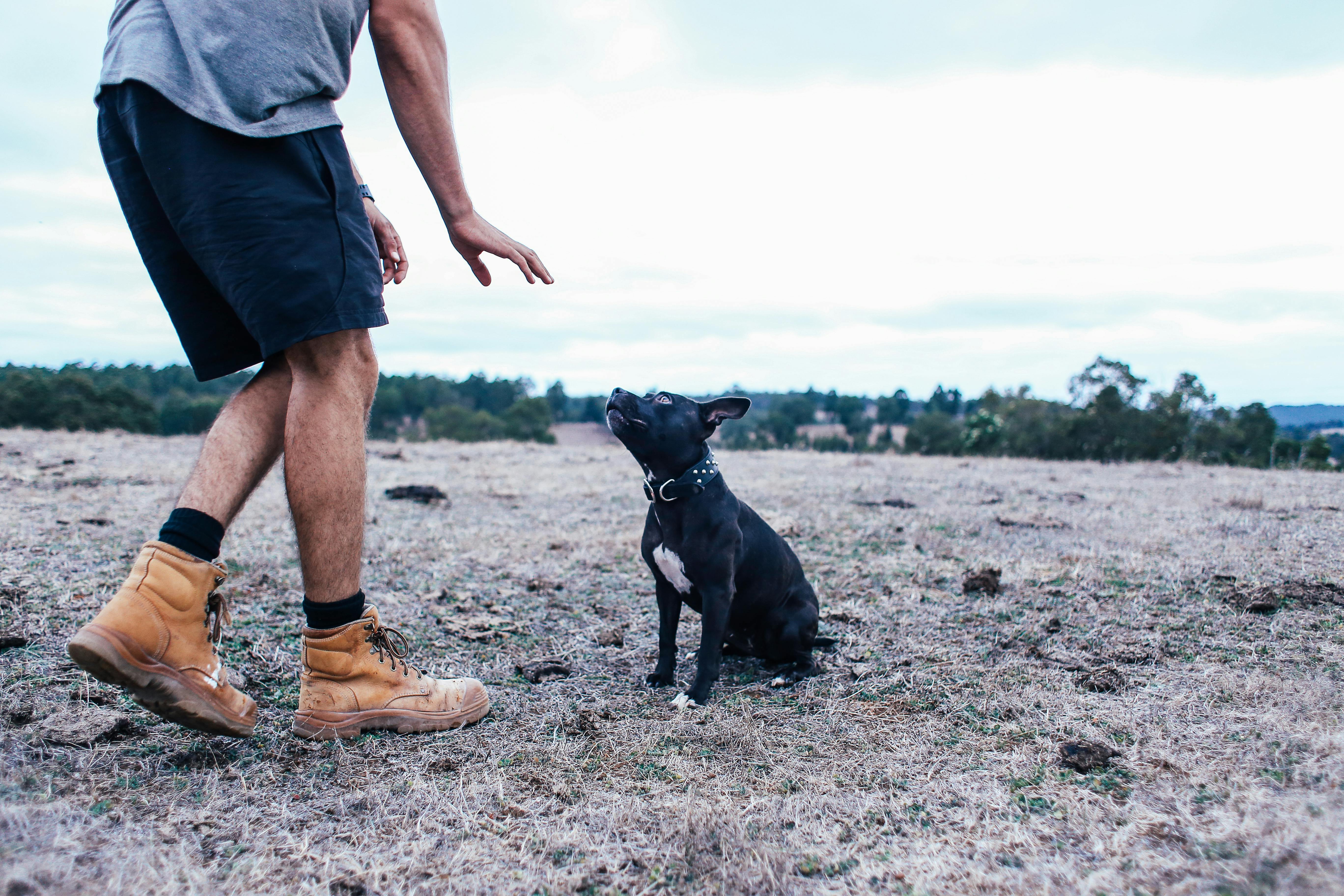
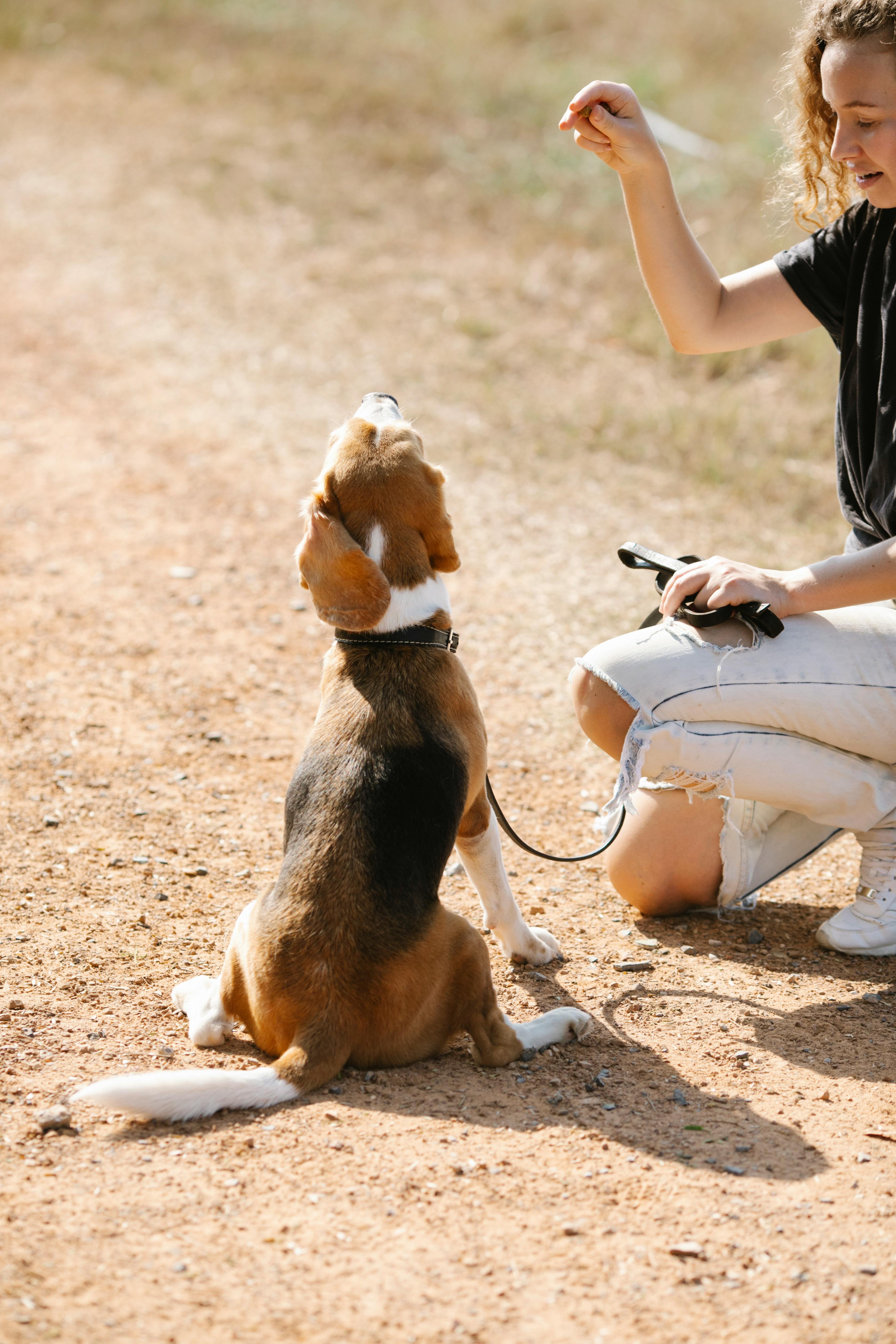
- Sit: the single most useful foundation behavior — quick to teach and immediately practical
- Come (recall): start in a safe, enclosed, low-distraction space; make arriving at you the best thing in the world
- Stay: just 3–5 seconds at this age — duration comes much later
- Leash introduction: let the puppy wear a collar indoors first, then drag a short leash before attaching to you
- Socialization priority: varied people, surfaces, sounds, and calm dogs before the window closes around 14–16 weeks
Potty and Feeding Progression
By 3 months, most puppies can hold for 2–3 hours while awake. The schedule remains critical, but you should begin to see fewer accidents as routines solidify. Look for early signals: sniffing the floor in circles, sudden stillness, heading toward a corner. When you see any of these, immediately move outside — do not wait for it to happen indoors first.
Continue 3 meals per day. Meal timing directly supports potty training — a predictable feeding schedule creates predictable elimination, making your schedule more effective and accidents easier to prevent.
4–6 Months: Pre-Teen Development
This phase brings a sharper, more capable learner — and also the first signs of independence and distraction. Your puppy is growing fast, teething, and beginning to push boundaries in small ways. Consistency is essential. The training habits you lock in during this phase carry forward.
Training Focus
- Down: builds a calmer default posture and is essential for real-world manners
- Leave it: critical for safety on walks — dropped food, other animals, street finds
- Loose leash walking: start on low-distraction streets; consistency now saves months of frustration later
- Impulse control games: "wait" before going through doors, before meals, before releasing to play
- Stay extension: now building toward 30+ seconds in calm environments
Teething and Nutrition
Teething typically peaks between 3–6 months. Puppies chew more, may be mouthier, and may occasionally refuse food as their gums feel sore. Keep appropriate chew toys available at all times — this also protects your furniture. Continue puppy formula appropriate for size. Some puppies at this stage benefit from slightly increased portions as they enter a growth surge — monitor weight and body condition and adjust with your vet's input.
Most puppies can drop to 3 meals per day (if not already there) and may move toward 2–3 meals by the end of this phase depending on size. Toy breeds often do better staying at 3 meals longer due to blood sugar sensitivity.
6–12 Months: The Teenager / Adolescence Phase
This is the phase that surprises most owners. Your puppy may suddenly seem to "forget" things they knew perfectly well at 4 months. They may ignore recall when something more interesting is nearby. They may test limits daily. This is not regression — it is adolescence. Hormonal changes, brain reorganization, and a genuine drive toward independence are all happening at once. Large breeds go through this phase hardest and longest.
Owners who quit during this phase often say training did not work. In reality, they were 2–3 months away from the breakthrough. Double down on consistency, lower your expectations temporarily, and trust the process.
What Helps During Adolescence
- Keep training sessions short and fun — this is not the time for drilling difficult commands
- Use higher-value rewards in distracting environments — plain kibble will not compete with a squirrel
- Never punish the regression — it is developmental, not defiant; punishment adds anxiety without fixing the cause
- Increase physical exercise — a tired teenager is more manageable in training sessions
- Practice recall daily — this is when it gets tested most and needs the most reinforcement
Feeding at 6–12 Months
Most medium breeds drop to 2 meals per day during this phase. Large and giant breeds remain on puppy food longer than small breeds — switching too early can affect bone development. Toy and small breeds may begin transitioning toward adult food around 9–12 months. Always consult your vet before making the switch, especially for large breeds.
Important: do not free-feed (leaving food out all day) during this phase. A structured feeding schedule continues to support potty predictability and helps you monitor appetite — which is an early indicator of illness or stress.
1–2 Years: The Young Adult Phase
By one year, most small and medium dogs have crossed into emotional adulthood. They are calmer, more focused in training sessions, and their trained behaviors are solidifying into genuine habits. For large and giant breeds, true maturity may not arrive until 18 months to 2 years — or even later for the giants. But even these breeds should be significantly calmer by 18 months with consistent training throughout adolescence.
This phase is about refinement and reliability — extending commands to new environments, adding distance and duration to stays, proofing recall in genuinely distracting situations, and locking in loose-leash walking as the default mode.
Feeding as a Young Adult
Most dogs at this age do well on 2 meals per day — morning and evening. One meal per day is fine for some dogs but can increase the risk of bloat in deep-chested large breeds. Always check with your vet for large and giant breeds before moving to one meal. Small breeds that were hypoglycemia-prone as puppies should stay on 2 meals. Fully transition to adult food by 12–18 months for small breeds, and 18–24 months for large breeds.
Size-Specific Timelines
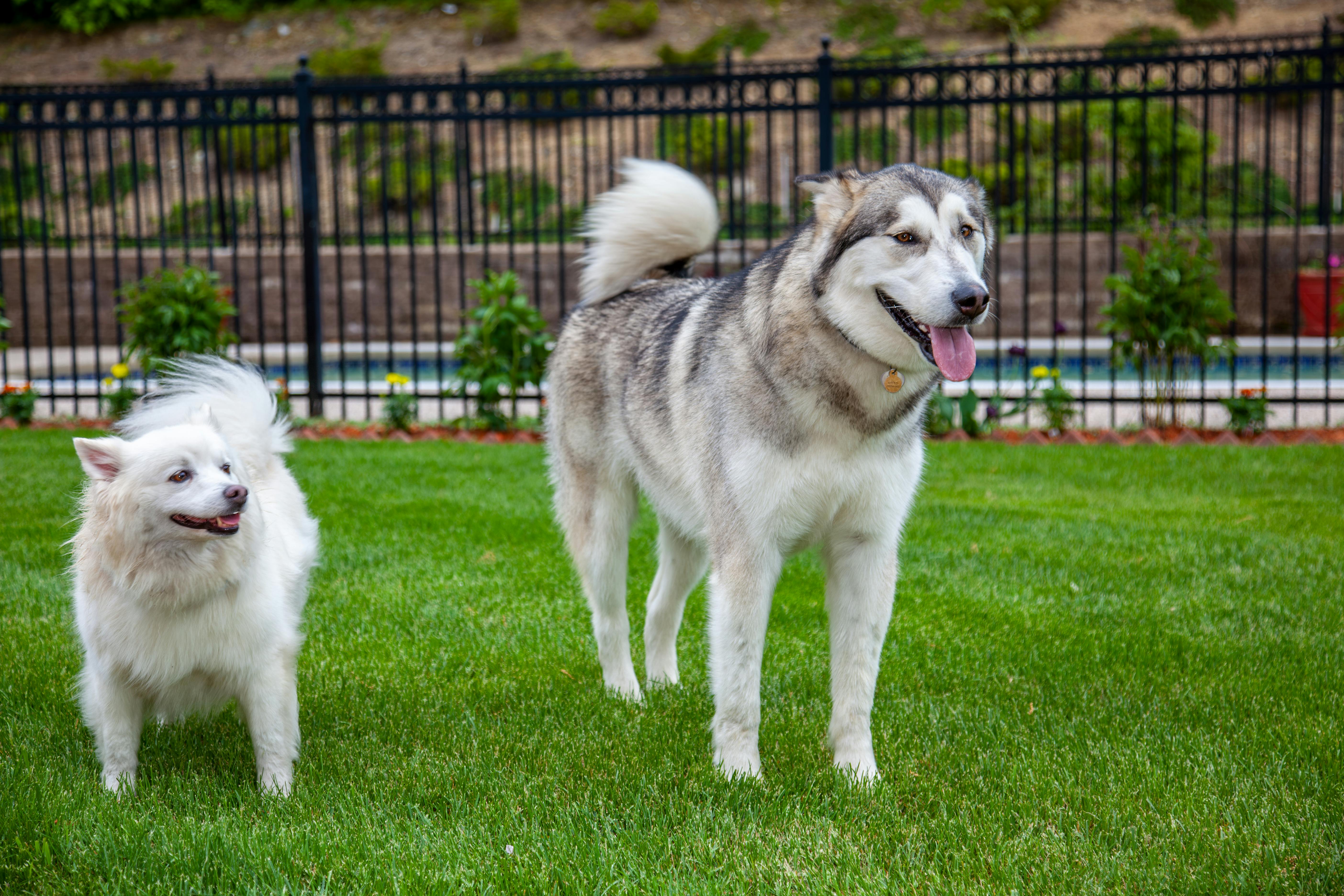
One of the most overlooked variables in puppy training is breed size. The same calendar age means very different things depending on whether your puppy will mature at 6 lbs or 100 lbs.
| Milestone | Toy Breeds (<10 lbs) | Small (10–25 lbs) | Medium (25–50 lbs) | Large/Giant (50+ lbs) |
|---|---|---|---|---|
| Full emotional maturity | 8–12 months | 10–14 months | 12–18 months | 18–36 months |
| Adolescence peak | 4–8 months | 5–10 months | 6–12 months | 8–18 months |
| Switch to adult food | 9–12 months | 10–14 months | 12–16 months | 18–24 months |
| Move to 2 meals/day | Stay on 2–3 meals; monitor blood sugar | 6–9 months | 6–9 months | 6–9 months; avoid one meal |
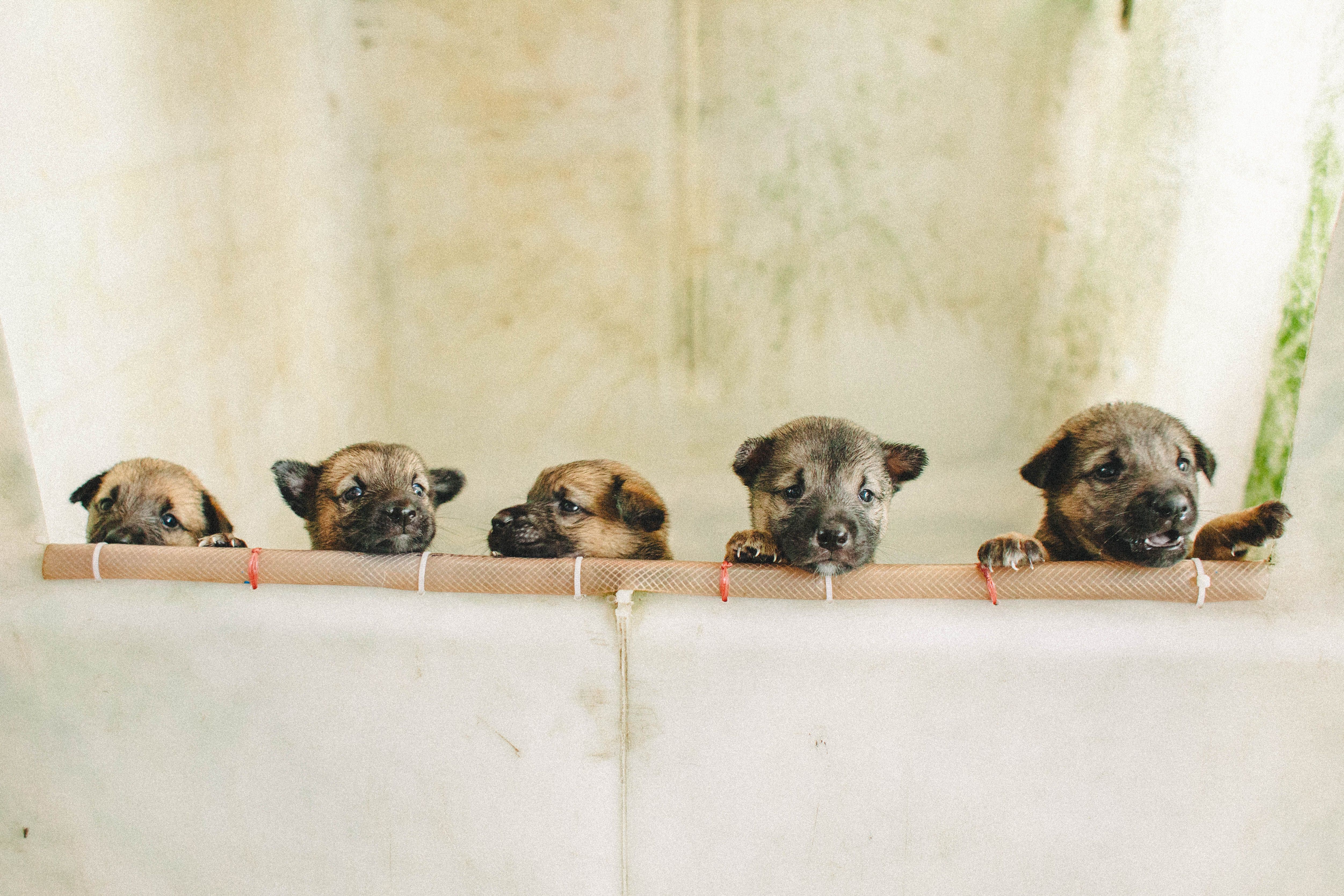
Key point for large breed owners: large and giant breeds have the longest puppyhood. A 1-year-old Great Dane is still deep in adolescence. Setting the same behavioral expectations as a 1-year-old Poodle is a setup for frustration. Extend your patience, extend your timeline, and the results will follow.
Nutrition Changes Through the Ages
What a puppy eats and how often they eat is not just a nutritional question — it directly shapes potty training reliability, energy during training sessions, and long-term health. Here is what to know at each stage.
- 8–12 weeks (infant): high-calorie puppy formula with DHA for brain development; 3–4 meals per day; no table scraps
- 3–6 months (growing): same puppy food; 3 meals per day; increase portions as weight increases; monitor for healthy weight
- 6–12 months (adolescent): continue puppy food appropriate for size; transition to 2 meals; watch for overfeeding as growth slows
- 12–18 months (young adult, small/medium breeds): begin gradual transition to adult food over 7–10 days
- 18–24 months (young adult, large breeds): transition to large breed adult formula; 2 meals per day; avoid one-meal schedules
Potty Training Deep Dive
Potty training is less about the puppy and more about the owner's consistency and setup. Most puppies who still have accidents at 6 months are not "slow learners" — they are living in an environment where the routine is not clear enough, consistent enough, or the signals are being missed.
Establishing the Potty Area
Choose one specific area outside — ideally a spot with a consistent surface (grass, gravel, or pads if apartment-based) — and take your puppy there every single time. The accumulated scent of previous eliminations acts as a trigger. Avoid rotating between multiple spots, especially in the early months.
Distance Rules
Spacing that supports success: food and water bowls should be at least 10–15 feet from the sleeping area, and the potty area (whether outdoor or an indoor pad setup) should be as far from both as your space allows. Puppies instinctively avoid eliminating near where they eat and sleep — and violating these distances creates confusion.
Schedule Tied to Feeding
One of the most reliable potty training tools is tying the outdoor trip directly to the meal schedule. Most puppies need to eliminate within 5–20 minutes of eating. If you feed at 7am, take outside at 7:15am. If you feed at noon, take outside at 12:15pm. That one-to-one connection between meal and potty trip is more reliable than a purely clock-based schedule.
Reading Your Puppy's Signals
- Sniffing the floor in tight circles
- Sudden stillness or freezing mid-play
- Heading toward a previously used spot
- Whining, circling, or pawing at the door
- Squatting even briefly — immediately redirect if caught before it starts
Common Accidents and Solutions
If your puppy has frequent accidents indoors, do not blame the puppy — audit the routine first. Were they taken out recently? Was the feeding schedule consistent? Were they confined too long? Clean indoor accidents with an enzymatic cleaner to fully neutralize the scent, or the spot becomes a magnet for repeat behavior. Never punish after the fact — if you did not catch it within two seconds, the connection is already gone.
Feeding Setup and Schedule
Where you place food and water, and when you offer them, affects training in ways most owners do not realize. A thoughtful feeding setup simplifies potty training, supports routine, and reduces anxiety around food.
- Food and water bowls: placed together or side by side in a consistent, quiet corner of the kitchen or utility area
- Distance from sleeping area: at least 10–15 feet — or in a completely different room if possible
- Distance from potty area: as far apart as your space allows — never in the same room or zone
- Feeding times: align with your schedule so a post-meal potty trip is predictable and never rushed
- Water access: available all day except the last 1–2 hours before bed (to support overnight holding)
Feeding from a puzzle toy or snuffle mat at least once per day adds mental enrichment without extra effort — it slows eating, reduces bloat risk, and tires the puppy out mentally before a training session.

Common Mistakes by Timeline
Starting Too Late or Expecting Too Much Too Soon
Both extremes cause problems. Waiting until 6 months to "start serious training" means missing the most receptive learning windows. But expecting a 10-week-old to hold a reliable sit-stay or stay clean overnight sets up the puppy — and you — to fail. Match your expectations to the developmental stage in front of you.
Inconsistent Potty and Feeding Schedules
Feeding at different times each day makes it impossible to predict when elimination will happen. Varying the potty schedule breaks the routine the puppy needs to build bladder control. Consistency does not have to be perfect — but it needs to be close enough that the puppy experiences the routine the same way most of the time.
Skipping Socialization Windows
The critical socialization window closes around 14–16 weeks, and it never reopens. Owners who wait until vaccinations are fully complete (often around 16 weeks) may miss most or all of it. Work with your vet on a safe early socialization plan — controlled exposure to vaccinated dogs, clean environments, and a variety of people and surfaces is worth the small risk during this window.
Mixing up zones: placing food bowls near the sleeping area, or the sleeping area near the potty spot, creates confusion that directly undermines potty training progress. Puppies cannot follow instincts that contradict the setup. Space and separation make the instinct work for you.
Training Session Guidelines by Age
| Age | Session Length | Sessions per Day | Notes |
|---|---|---|---|
| 8–12 weeks | 2–3 minutes | 2–3 per day | Focus on name and simple rewards only |
| 3–4 months | 3–5 minutes | 2–3 per day | Simple commands: sit, come, name response |
| 4–6 months | 5–7 minutes | 2–3 per day | Expanding commands and leash basics |
| 6–12 months | 5–10 minutes | 1–2 per day | Keep fun; avoid drilling during adolescence |
| 1–2 years | 10–15 minutes | 1–2 per day | Proofing, reliability, and advanced behaviors |
Always end on a win — even if the session is going poorly, ask for something easy and reward enthusiastically before stopping. The puppy's last memory of training should always be a positive one.
Realistic Expectations at Each Stage
- 8–12 weeks: accidents every 1–2 hours are normal; no reliable recall yet; crate whining at night is typical
- 3–4 months: 60–70% accident-free days; sits reliably at home; may ignore commands when excited
- 4–6 months: fewer accidents; basic commands working in calm settings; loose leash just beginning
- 6–12 months: adolescence may cause apparent regression — normal; commands should work indoors reliably
- 1–2 years: training solidifies into habits; occasional testing still normal until full maturity
Red flags that warrant a vet check at any age: persistent accidents despite consistent schedule, sudden regression after full potty training, dramatic appetite changes, persistent fearfulness despite positive exposure, or any aggression that appears suddenly and without a clear trigger.
When to Seek Professional Help
Most puppy training is completely manageable at home with consistency and patience. These are the situations where professional guidance genuinely changes outcomes.
- Any growling, snapping, or biting toward people — even "play" biting that breaks skin or causes real pain by 5 months
- Extreme separation distress — screaming, self-injury, destruction that escalates and does not improve
- Fear that is worsening despite calm, patient, positive exposure efforts
- Persistent potty training failure past 6–7 months despite consistent schedule and clean setup
- No meaningful progress after 4–6 weeks of daily training at home
Look for trainers with CPDT-KA, KPA-CTP, or IAABC credentials, and confirm they use force-free methods. A good puppy class also provides structured socialization that is hard to replicate on your own.
Watch: Puppy Training in Action
See real puppy training techniques applied age by age — from early socialization through adolescence and into the young adult phase — so you can put this guide into practice with confidence.
Final Thought
The puppy in front of you today will not be a puppy for long. The effort you put in during each of these early windows does not just produce a well-trained dog — it shapes how your dog experiences the world, how much they trust you, and how confident they feel navigating everything that comes after. Get the timing right, be consistent with the basics, and the rest follows naturally.
Related Reading
- Training Your Dog with Love — core positive reinforcement techniques that work at any age
- Keeping Your Dog Active — how exercise supports better behavior at every stage
- Choosing the Right Food for Your Pet — reading labels, life stages, and nutrition basics
- Golden Retriever Care Guide — breed-specific timelines and what to expect